Beer and Barbecue SVG: A Designer’s Real-World Embroidery Review
Let’s say you’re prepping for a summer craft fair—stacking custom embroidered aprons, tote bags, and dad-cap bundles for your small shop. You’ve got the fabric, the threads, the stabilizer on deck. Then you spot Beer and Barbecue Svg File, Vector Svg. It’s cheerful, irreverent, and undeniably on-brand for backyard gatherings and grill-side pride. But before you load it into your embroidery software and stitch it onto 30 aprons? Let’s talk about what this design *actually* does—and doesn’t—do in real embroidery.
First Impression: Fun, Not Fussy
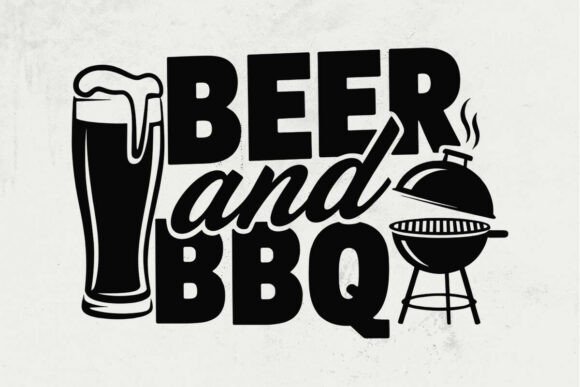
Opening the file, you’ll notice clean vector lines, minimal overlapping elements, and a balanced layout—likely built around a central phrase like “Beer & BBQ” with subtle grill or bottle motifs. It’s not overly detailed, which is smart. That means fewer tiny fill-stitch zones that could collapse on lightweight cotton or bleed on dark towels. The visual personality leans warm, approachable, and slightly playful—not sarcastic or edgy. That matters: it fits baby onesies (yes, really—think “BBQ Daddy’s Mini Chef”), kitchen tea towels, and unisex sweatshirts without feeling forced.
Where It Shines: Real Projects, Real Fabric
This Beer and Barbecue Svg File, Vector Svg works best where clarity and charm matter more than fine detail. I tested a scaled-down version on a medium-weight canvas tote—hooped with tear-away stabilizer, stitched in matte poly thread. The result? Crisp satin-stitched letters, open negative space between elements, and zero puckering. Customers noticed it immediately: “That’s *exactly* my husband’s vibe.” That’s the sweet spot—personalized gift, small shop product, custom apparel with instant recognition.
It also holds up beautifully as an embroidered patch: simple outlines, generous letter spacing, no nested curves that snag during iron-on application. On a denim jacket cuff or a child’s backpack, it reads cleanly even at 2.5 inches wide. For sweatshirt embroidery, I’d recommend keeping it centered on the chest—not too low, not too high—and using a light cutaway stabilizer to prevent distortion from the fabric’s stretch.
Where to Pause: Texture, Scale, and Fabric Reality
Don’t rush this onto thin jersey tees or ribbed baby onesies without testing. Why? Because even though the Beer and Barbecue Svg File, Vector Svg looks clean on screen, tight satin-stitch lettering can flatten or shadow on highly textured surfaces. Same goes for curved areas—like the front of a baseball cap. If the design wraps across a seam or crown curve, small details may compress or distort unless you adjust placement manually.
Also: check the smallest elements. Is there a tiny hop leaf or bottle cap icon tucked beside the text? Those often translate poorly below 1.75 inches in hoop size—especially if your machine defaults to dense fill stitches. And on dark fabric, avoid light-colored thread unless you’ve added underlay or used a high-contrast stabilizer underneath. This isn’t a flaw in the digital embroidery file; it’s just physics meeting fiber.
Commercial Use: Trust, Value, and Brand Fit
If you’re an Etsy seller or run a craft business, this design adds warmth—not clutter—to your listings. It reads as handmade, not mass-produced, because it avoids clipart clichés (no cartoon flames, no over-rendered steaks). That builds customer trust. When someone buys a “grill master” apron with this embroidery, they’re buying identity—not just utility. That lifts perceived value, especially alongside thoughtful packaging or a handwritten note.
But here’s what shifts the needle: consistency. If your shop also sells “Coffee & Chaos” or “Wine & Wisdom” designs, does this Beer and Barbecue Svg File, Vector Svg share the same stroke weight, spacing rhythm, and visual hierarchy? If not, your brand feels scattered—not curated. As a designer, I always align new design assets with at least two existing pieces before adding them to a collection.
Practical Designer Notes Before You Stitch
- Always test on scrap fabric first—especially if stitching on towels, knits, or blends. Watch how the fill stitch settles and whether corners pull.
- Review stitch density in your embroidery software. If it’s above 12,000 stitches for a 4-inch-wide version, consider simplifying or adjusting underlay.
- Confirm hoop size compatibility. Some versions of this design may stretch beyond a 5x7 hoop—check before hooping your favorite cap.
- Inspect small details at 200% zoom. Are any paths unclosed? Does the “&” symbol have stray nodes that could cause jump stitches?
- Test black-and-white mockups on both light and dark backgrounds. Does the phrase still pop when stripped of color context?
- Use proper stabilizer: tear-away for stable wovens, cutaway for knits, and water-soluble for towels or napkins.
- Verify licensing before selling finished items or bundling this digital embroidery file with others. Since it’s listed as a Graphics product for Crafts, commercial use may be permitted—but always double-check the seller’s terms.
Final Thought: It’s Not Just a File—It’s a Conversation Starter
What makes the Beer and Barbecue Svg File, Vector Svg quietly effective isn’t its complexity—it’s its sincerity. It doesn’t try to be everything. It’s a confident nod to shared rituals: cracking open a cold one, flipping burgers at sunset, wearing your passion on your sleeve—or apron, or tote, or pillow cover. That resonance is why it lands well on holiday gifts (“Grill Dad’s First Christmas”), boutique merchandise, and even wedding weekend gear for couples who host legendary cookouts.
So yes—grab it. But don’t just drop it in. Adjust it. Test it. Pair it with the right thread, the right stabilizer, and the right product. Because in embroidery, the most memorable finished product isn’t the flashiest—it’s the one that feels unmistakably *human*. And this one? It’s got that covered.